
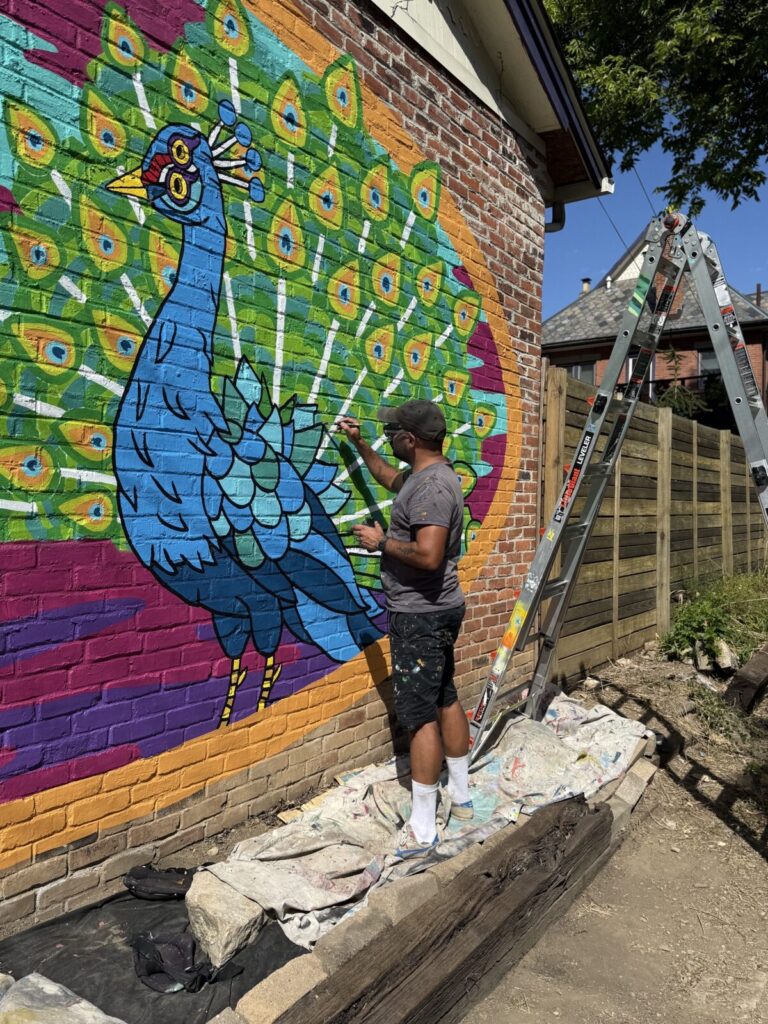
Being a muralist in Columbus, Ohio in 2026 feels like standing at the intersection of city growth, culture, and human connection. Blank walls are invitations to transform space and spark conversation. Here in Columbus, murals are not just public art; they’re community anchors, wayfinding landmarks, and reflections of our diverse city identity.
As an artist who paints commercial murals and custom large-scale work, I’ve seen first-hand how deeply Columbus has embraced vibrant, meaningful art. From downtown corridors to side streets in neighborhoods, murals are shaping how people experience the city. The city is alive with visual narratives that extend beyond mere decoration.
For me, creating a commercial mural is a unique blend of artistry and partnership. A business doesn’t simply want color on a wall — they want a custom piece that captures the heart and story of their brand and community. I remember one commission early in 2024 for a Columbus office: we wove local landmarks and brand identity into a cohesive, uplifting scene that transformed what was once a plain wall into a feature that clients and employees still talk about.
Designing these custom experiences requires more than paint — it demands listening. I spend weeks engaging with clients to understand their vision, researching the neighborhood’s history, and trying to create a visual language that’s both authentic and striking. A successful commercial mural does more than look good; it becomes part of the city’s pulse. I want people to walk by and recognize themselves in the imagery, or at least feel something — joy, nostalgia, inspiration.
But it’s also a challenge. Balancing creative integrity with client needs, city regulations, and public expectations can be tricky. Columbus has thoughtful design guidelines and public art initiatives that help ensure murals contribute positively to the built environment. Some guidelines influence where murals can be placed or how commercial language is used, which means as a muralist, I need to think beyond aesthetics and consider legal and community contexts too. (Columbus.gov)
Despite the complexities, what keeps me here is how dynamic the local art ecosystem has become. Programs like youth mural initiatives along the Olentangy Bike Trail merge creativity with technology, opening new doors for tomorrow’s artists. (ARtsway) And city-wide conversations about expanding public art mean murals won’t just be concentrated in a few districts — they’ll spread into areas long without large-scale visual engagement. (WOSU Public Media)
Being a muralist in Columbus today means you’re more than a painter — you’re a storyteller, collaborator, and advocate for the power of art to shape community. And in 2026, I’m more excited than ever to pick up my brush, look at another blank wall, and imagine what comes next.